Relic point Vietnam
Việt Nam
Dinh Huong mausoleum
Dinh Huong Mausoleum was built in 1727 (18th century) in the mausoleum to store the body of Duke La Quy Hau. He was born in 1688 locally. In 1730, during the reign of Le Duy Phuong, he was appointed as a military servant, a military guard, and then a eunuch. During the reign of Le Y Tong, he was sent twice as envoy to the North, in 1735 and 1739. In 1740, during the reign of Le Hien Tong, he led troops to suppress rebellions in the areas of Kinh Bac, Son Nam, and Hai Duong. He died on the 9th day of the 6th month in the year of the Snake (1749), at the age of 61. In 1754, the king appointed him the title of Phuc Than Loyal Great King. In particular, the mausoleum was built by the Duke himself in his hometown when he was still alive. Dinh Huong Mausoleum is located on a circular hill, about one hectare wide, surrounded by laterite walls (recently renovated). The architectural layout of the mausoleum consists of three main parts: the burial part in the middle, the worship part on the left, and the stele part on the right. The stone mausoleum is about 100 square meters built of square laterite. In front of the tomb are two mandarins leading horses standing facing each other. The pair of statues of mandarins leading horses are considered masterpieces of stone carving art. The military officer wearing a sword and leading a horse on the right side has a big face and wide jaw. The military officer carrying a sword and leading a horse on the left side has a long beard and small face. The entire statue's shape is elaborately carved to exude an extraordinary, dignified appearance. Coming to Dinh Huong Mausoleum, visitors will admire the worship area, which is also built square like the burial area, with walls made of laterite, steps built in front, a stone collapse on top, an altar throne, and on both sides there are statues of maids. The casket and the couple lie prostrate. Below the altar is an incense burner, a stone table, and a pair of goats sitting with their heads facing each other across the Shinto path. In the distance, a pair of elephants knelt down and prostrated themselves. On the right side of the grave is a stele house with 4 arched rolling doors, inside is a stone stele recording the merits of the person being worshiped. The inscription says that the stele was created in 1729. Overall, the materials used to create the artistic architectural work of Dinh Huong mausoleum are mainly green stone, finely chiseled and trimmed with fire cloud motifs, high-embossed spiral clusters, and interlocking geometric patterns. hooked together and posted oppositely. What is most unique about this architectural work is the art of carving round statues in a realistic style with a naturalistic tendency. Statues of people and animals at the mausoleum are made of green stone, carved very vividly. The statue is large in size, fat, sturdy, and meticulously trimmed. It can be said that this is a massive architectural work, elaborately carved in stone with skillful craftsmanship. The mausoleum complex is a typical first-class stone art sculpture in Bac Giang province. The antiques in the mausoleum are preserved relatively intact Tourists visiting Dinh Huong Mausoleum will be fascinated by the stone sculpture art of ancient artisans. The highlight and unique feature of Dinh Huong mausoleum are the massive statues, much larger than those in other mausoleums, delicately carved. According to statistics, in Bac Giang, 46 ancient stone structures have been discovered and recognized, mainly stone mausoleums. The stone mausoleum system is proof of the art of tomb sculpture that has developed to its peak and holds an important position in the architecture and ancient stone sculpture of Vietnamese mausoleums. These are truly the quintessence of ancient sculpture, with sophistication expressed in every line on the statues. Artifacts and stone statues also contribute to increasing the historical value and cultural and artistic value of ancient mausoleums. Dinh Huong Mausoleum is a place to honor the nation's architectural tradition of stone sculpture, clearly shown in the art of sculpting statues of people or sacred beasts and worshiping objects, as well as rich architectural decorations and life-style patterns. The cave is truly typical of ancient Vietnamese stone sculpture art. With values of cultural history and typical architectural art, Dinh Huong mausoleum has been attracting tourists to visit. SOURCE OF BAC GIANG TOURISM
Bac Ninh
3085 view
Rating : National monument

Phu Lao Communal House
Phu Lao Communal House in Phu Lao village, Dao My commune, Lang Giang district, Bac Giang province. Despite many years of war, devastation from sun and rain, and deterioration due to many renovations, Phu Lao communal house still retains the basic features of an ancient Vietnamese communal house, especially the about art and architecture. Phu Lao Communal House was built in 1688, during the reign of King Le Chinh Hoa the 15th. Phu Lao Communal House was built on a campus of more than 1,500 square meters at the beginning of the village, looking to the Southeast to worship Duc Cao Son - Quy Minh who are the kings. Famous generals of the Hung King period were instrumental in suppressing the enemy and defending the country. These are famous generals whose temples were built in many places in the Northeast region to honor those who contributed to the village and the country. They were ordained as superior gods by many dynasties and were classified as Gods of Goodness, eliminating evil, eliminating evil and protecting good people. At the same time, the communal house also worships General Cong Dao and Lady Quy Thi, local people who passed the exam to become mandarins, and donated money to build a communal house to merit the village. Phu Lao communal house is located on a high, open, beautiful strip of land at the beginning of the village, the back of the communal house is built outward, the communal house's face faces the village, hidden under the cool green banyan shade, reflecting on the clear water wharf. In front of the communal house's door, there is a large, semi-oval pond and the communal house's yard is large and flat. The newly built altar house consists of three small rooms. In the back yard of the altar there is a four-sided stele, built in the 15th year of Chinh Hoa (1694), composed by Dr. Hoang, talking about his contribution to building the communal house. Ms. Dao Thi Hien. The communal house has four high, wide roofs, the roof is covered with bai-shaped tiles. The great hall consists of seven compartments, 23m long, 12m wide, with 8 trusses, 6 rows of columns, 48 columns. The trusses are structured in a way that overlaps the beams and gongs, combined with stripes at the four corners. The four middle columns have four panels running nearly the entire room, creating four large decorative panels. The four sides of the pavilion still have traces of paneling and are surrounded by a table door; All rooms have floors. Except for columns, rafters and diaphragms, other wooden architectural structures such as wooden poles, corbels, planks, stripes, pillars... are carved with many shapes reflecting aspects of village life. With its unique architectural and wood carving art values, since 1982 Phu Lao communal house has been recognized by the State as a nationally ranked historical relic, after being restored twice to prevent deterioration. , most recently in 2011, up to now, the state, party committees, authorities, social organizations, especially Buddhists everywhere have contributed to building relics that are getting better and better, in order to preserve the relics. the unique cultural values of our ancestors for our descendants for generations to come. SOURCE World Heritage e-magazine
Bac Ninh
2634 view
Rating : National monument

Listening to battles - a mark of the Le dynasty
Nghe Battle relic is located on a hillock, about 1.2 km southeast of Kep town center (Lang Giang district). Distance from city center. Bac Giang is about 20 km to the Northeast. With a total area of 1,143.2 m2, Nghe Battle is a historical and cultural relic of the people and locality of Kep Village, Can Dinh commune, Can Dinh canton, Bao Loc district, Lang Giang district, Kinh Bac region. Now belongs to Kep 11 and Kep 12 villages, Huong Son commune, Lang Giang district. Currently, Nghe Trien has an architectural plan in the style of Dinh with 03 pre-worship spaces connecting 02 back palace spaces. Mr. Nguyen Quang Tho, 84 years old, in Kep 11 village, Huong Son commune - Head of the Subcommittee for the Management of Nghe Trien historical and cultural relics, said that according to ancient legend, Nghe Truong worships the two generals Trung. When the Can Tram battle was fierce, many insurgents and generals died in this area. People set up a altar to worship the souls of the insurgents and generals, from which it was called "The Battle". Currently, the remaining relics and artifacts are preserved in relics such as: the holy palanquin of the Le Dynasty (18th century); Phu Lang ceramic incense bowl (19th century); 02 ancient statues of the Nguyen Dynasty (20th century). The altar thrones, statues, incense bowls, bronze bells, flower vases and other worship objects prove that Nghe Battle was built in the 18th century. Located in the relic complex of Can Tram citadel (Kep town, Lang Giang district) associated with our people's resistance war against the Ming army in the early 15th century. Nghe Battle is an ancient cultural and religious historical work. , a long time ago (18th century) with important historical and cultural significance for the people and localities in the region. During the resistance war against the French colonialists in the period 1946-1947, the French enemy bombarded the area of Kep village, Nghe Truong was also destroyed and damaged, local people many times contributed money, contributed to repairing and renovating. The project has been degraded after many centuries of use. People and local authorities at all levels have repeatedly contributed effort and money to invest in renovation and repair. The main milestones were in 1991 and 2006, investing in repairing a number of items and rebuilding 02 halls of the harem court. In 2019, building 03 new, beautiful and spacious halls of the pre-worship court. In 2009, Nghe Battle was ranked and recognized as a provincial-level historical and cultural relic by the People's Committee of Bac Giang province (Decision No. 1587/QD-UBND dated September 17, 2009). Contributing to enhancing the meaning and value of history and traditional culture of the people in the region and serving tourists who come to study and visit increasingly developed tourism. SOURCE Bac Giang Tourism Information & Promotion Center
Bac Ninh
3036 view
Rating : Provincial level relics
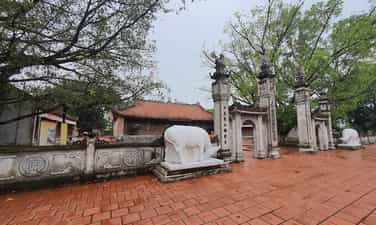
Quat Temple
Quat Temple is a place to worship the famous general Yet Kieu, First Admiral of the Thanh Tran dynasty's navy. Yet Kieu's real name is Pham Huu The (1242-1301), from Ha Bi village, Yet Kieu commune. He was a famous general of the Tran Dynasty, talented and virtuous. He was a lieutenant general, one of the two generals holding the moderation flag of Hung Dao Vuong Tran Quoc Tuan. He had a special talent for swimming and diving. He repeatedly punctured the Mongol enemy's boats, creating famous victories in history. He was a man of great merit. Helped the Tran Dynasty destroy the Yuan army three times in the 13th century. He was awarded the title "Tran dynasty right general, first naval commander, marquis" by King Tran. After his death, King Tran ordained Ha Bi villagers to build a temple and honor him as the village's Tutelary God. Yet Kieu also has temples and shrines established in many places, but the largest is still Quat temple. Quat temple area has existed for more than 700 years. In the 17th and 18th centuries, the temple was spaciously embellished and repaired many times during the Nguyen Dynasty with a campus of 2,700 m2. Quat Temple relic area was ranked as a national relic on January 28, 1989. In 2017, Hai Duong province completed the renovation and repair of this temple. The temple has been renovated in 3 phases with a total cost of tens of billions of dong from contributions from tourists and local people. Quat Temple Festival takes place in Spring (from January 10 to 20), Fall (from August 14 to 16 of the lunar calendar). On this occasion, local people and visitors return to the Ha Bi river area to pay their respects to Thanh Hoang Yet Kieu. On October 1, Gia Loc district, Hai Duong held a ceremony to receive the Certificate of registration of Quat Temple Festival as a national intangible cultural heritage and organized the opening ceremony of the traditional Autumn festival of Quat Temple. Source: Electronic information portal of Gia Loc district, Hai Duong province.
Hai Phong
3566 view
Rating : National monument
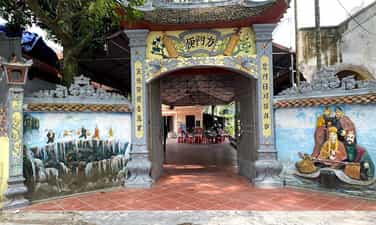
Ngoc Lo Pagoda - Linh My Tu
The pagoda's literal name is Linh My Tu, located in Ngoc Lo village, Tan Viet commune, Thanh Ha district, Hai Duong province. The temple worships Buddha according to the Mahayana sect. It is unclear when the pagoda was built, on a large scale with all the following items: Upper hall, incense burning, front hall, three gates. Through time and war, the pagoda was destroyed, then restored many times in 1781, 1797, 1817, 1826, 1908, 1912. The current pagoda has a 工 Cong style layout with 13 compartments, bearing architectural imprint of the Nguyen Dynasty. The pagoda currently preserves many valuable antiques, including 11 steles and 25 statues. Every year, the pagoda opens a festival on the 17th day of the 7th lunar month. The pagoda is ranked as a national monument according to Decision 04/Decision - Ministry of Culture and Sports - dated January 19, 2001. Source Electronic information portal of Thanh Ha district, Hai Duong province.
Hai Phong
2970 view
Rating : National monument
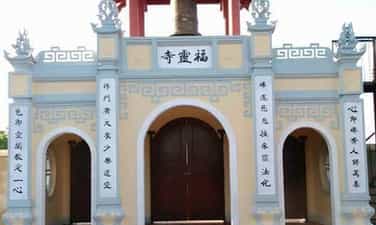
Tu Ha Temple
Tu Ha Temple is located in Phuc Gioi village (formerly Thanh Binh commune), now Thanh Quang commune. The temple worships three village tutelary gods: Dang Chan, Trinh Thi Khang and Dang Tri, who helped King Dinh Tien Hoang quell the rebellion of 12 warlords in the 10th century. Not only does it carry spiritual cultural values, the temple is also a place The leaders of the Provincial Party Committee chose it as a base for living, meeting, and leading the people in the province to fight against the French colonialists in the period 1946 - 1954. Here, in November 1951, the leaders of the Provincial Party Committee and The Resistance Committee of Hai Duong province had a meeting to discuss plans with the main force, deciding to attack Xuan Neo and O Me (Tu Ky), opening a new situation for the resistance war against the French in Hai Duong. Currently, Tu Ha Temple still preserves many antiques and worship objects of the Le and Nguyen dynasties, typically 8 ordinations of the Nguyen dynasties in 1887, 1889, 1909, 1911 and 1924; three statues of the Holy Father, Holy Mother and Holy Son painted in red and gilded, 2 scrolls decorated with stylized flowers and leaves, 1 stone throne of the Le Dynasty, 2 steles of the Nguyen Dynasty... With great historical and cultural values , Tu Ha Temple has been ranked as a national historical and cultural relic since 2001. Source Electronic information portal of Thanh Ha district, Hai Duong province.
Hai Phong
3269 view
Rating : National monument

ATK2 Hoang Van area
Hoang Van Safety Area is located in Hiep Hoa district, Bac Giang province, 35km west of Bac Giang city. This is one of the loyal revolutionary bases, where many Party leaders worked before the August 1945 revolution, and where the Central Party Central Committee's Tonkin revolutionary military conference took place in April. /1945 chaired by General Secretary Truong Chinh to prepare for the revolutionary armed uprising to seize power in August 1945. Here you will be introduced to an overview of the Party's revolutionary base in the pre-uprising period, and visit some historical revolutionary relics of ATK: the place where the Party's revolutionary political training class was opened in the pre-uprising period. , where the revolutionary military conference of the Party Central Committee took place, visited Van Xuyen communal house in the "Red hamlet", a place associated with many revolutionary events in the locality, visited Y Son temple and mountain in Hoa Son commune, sightseeing and listen to an introduction to the history, architecture, precious relics of the temple, burn incense for luck, fortune, and wealth at the Temple. SOURCE: BAC GIANG DEPARTMENT OF CULTURE, SPORTS AND TOURISM CENTER FOR INFORMATION - TOURISM PROMOTION
Bac Ninh
2829 view
Rating : Special national monument

Document of Tho Ha village
The Tho Ha village document was built in the 17th century (according to the preserved stele, it was built in the 5th year of Vinh Thinh, 1680) to worship Confucius, Tu Phoi, 72 sages..., this place is considered is the cradle of Tho Ha education. This is also a place that attracts a large number of tourists, especially during the exam season, when scholars come here to burn incense and worship with sincere hearts. In particular, Tho Ha village has no fields, only residential land with an area of 20 hectares and a population of nearly 3,800 people. With such natural and social conditions, right from the village's founding, the people here chose a suitable profession to exploit many advantages. The chosen profession is pottery. It is the pottery profession that has created a bustling and famous Tho Ha. The village has been the most important ceramic center of the Northern Delta for several hundred years, next to Phu Lang and Bat Trang. Ancient Tho Ha pottery did not use glaze, that magical flexible clay was fired until the glaze spontaneously melted, clinging to the surface of the pottery in a shiny brown color, smooth as velvet, cool. The village only makes household ceramics, jars, small clay pots, and rice bowls that were famous at one time. The surface of the ceramic is dark purple, hard, and makes a sound like hitting cold steel. The remaining pieces of ancient pottery on the walls are still intact, and that's why the ceramic soul seems to linger forever. Along with pottery, rice paper making, noodle making, rice paper making, wine making, confectionery making, and services have also developed in Tho Ha, the village is often called a "multi-craft village". These occupations have created a new look for the village, through which we can see the boundless diligence and creativity of the people here. As a rich traditional craft village for hundreds of years, this place also has the interference of many unique cultural features of regions throughout the country. Among them, the most special are festivals with many traditional cultural activities such as: singing traditional opera, singing Quan ho, playing Chinese chess, cockfighting, table tennis... Ancient beauty with ancient architectural areas, ancient villages, unique culture along with traditional crafts imbued with the soul of the countryside, Tho Ha has been a familiar and attractive address for domestic and foreign tourists to visit. mandarin SOURCE: BAC GIANG PROVINCE ELECTRONIC INFORMATION PORTAL
Bac Ninh
2580 view
Rating : National monument

Dinh Lo Hanh
Dinh Lo Hanh Lo Hanh communal house is the common communal house of 5 villages: Cham, Chung, Khoat, Chua and Hanh, so it is also called Ca communal house. The communal house was built in the 11th year of Sung Khang (1576), worshiping Cao Son Dai Vuong and Phuong Dung Tien Chua - two gods who had meritorious services to the country and people during the time of King Hung. Lo Hanh Communal House has unique cultural value with sophisticated and unique carvings of dragons, phoenixes, deer, flowers, and scenes of human activities. Currently, the communal house still preserves many precious relics such as: two lacquer paintings of "The Eight Immortals" in the middle space in front of the harem door, a pair of 17th-century lacquered and gilded wooden chairs, a statue of Phuong Dung Tien Chua and the Cao Cao tablet. Son Dai Vuong..., especially the carving of a fairy strumming a bottom instrument - a testament to the birth and early development of Ca Tru in Vietnam. Initially, Lo Hanh communal house only had a large communal house shaped like the word "first". Through many renovations in 1694, 1850 and 1910, the communal house was built with a harem and two rows of left and right vu. The floor of the great communal house is 23.5m long, 12.3m wide, the height from the roof beam down is 6.6m, from the roof edge down is 2.1m; includes 5 compartments, 2 wings with 8 rafters, 4 main rows of columns and 2 rows of porch columns supporting under traps. The trusses have different structures, the middle rafters are all made in the style of "stacking beams and gongs", the side rafters are made in the "one who spreads gongs" style. On December 24, 1982, Lo Hanh communal house was ranked as a historical relic by the Ministry of Culture (now the Ministry of Culture, Sports and Tourism). SOURCE: DISCOVER VIETNAM TOURISM IN BAC GIANG PROVINCE
Bac Ninh
2953 view
Rating : National monument

Loi Dong Temple
Dinh Loi Dong Cultural and Historical Relic, Tan An Commune, Thanh Ha District, Hai Duong Province, was recognized by the Ministry of Culture, Sports, now the Ministry of Culture, Information and Tourism, as a Cultural Historical Relic in 1994. worshiping 3 famous people: General Yet Kieu, outstanding farmer hero Nguyen Huu Cau of the 18th century and Dr. Nguyen Nhu Ngu. Every year on the 12th and 13th day of the third lunar month. Tan An Commune People's Committee, Monument Management Board, officials and people in the commune organized an incense offering ceremony to commemorate the merits of three famous people who have contributed to the country and people and aroused cultural values. traditions of Tan An hometown. Electronic information portal of Tan An commune, Thanh Ha district, Hai Duong province.
Hai Phong
2964 view
Rating : National monument