
 vn
vn en
en ja
ja ko
ko zh
zh


Tòa Thánh Tây Ninh – the most magnificent religious complex of the Cao Đài faith.

The Tây Ninh Holy See – a truly unique architectural marvel, brought to life through sheer human effort and profound faith, without ever relying on a single blueprint.
Architectural Marvel Built with Faith and Human Endeavor
While other structures rely on architects and blueprints for their design and construction, the Tây Ninh Holy See was built by Đức Phạm Hộ Pháp (Guardian Phạm) without any formal plans or drawings, relying entirely on the dedication of its laborers.

The Tây Ninh Holy See.
The Tây Ninh Holy See, affectionately known by locals as the Holy Temple, is located on Phạm Hộ Pháp Street, Hòa Thành town, Tây Ninh province.
Considered one of the most magnificent religious architectural works of Cao Đàiism, the Tây Ninh Holy See showcases unique architecture that attracts thousands of visitors every year.
Tây Ninh Holy See - The Central Place of Worship for Cao Đàiism
While grand constructions typically involve architects designing and building according to blueprints, the Cao Đài Tây Ninh Holy See was built by Đức Phạm Hộ Pháp (Guardian Phạm) without any formal documents or drawings, relying entirely on the hard work and dedication of its laborers.
Construction began in 1933, was completed in 1947, and the Holy See was finally inaugurated in 1955. It was built with the collective effort of local people who received no wages for their work. Many even abstained from marriage during construction to ensure the necessary balance of 'yin and yang' for the structure. All theories regarding its dimensions and architecture were guided by Đức Lý Giáo Tông Giáng Cơ (His Holiness Lý, the Supreme Being Manifested).

The inner precinct of the Holy See spans 1 km². The layout of this magnificent structure embodies profound religious and mystical philosophies. According to sacred texts, the Holy See symbolizes the Jade Palace (Bạch Ngọc Kinh) manifesting in the mortal world. You'll notice easily recognizable symbols like the Guardian (Hộ Pháp) statue and the Ông Thiện (Goodness) statue, all crafted with meticulous care and elaborate detail.
Within the fenced inner precinct of the Holy See, nearly 100 different architectural works, including the Main Holy See building, various administrative offices of the Cao Đài religion, and stupas (Bửu Tháp), are interconnected. Wide, expansive roads link these structures together.

Fundamentally, the Tây Ninh Holy See harmonizes a myriad of unique architectural styles from various religious structures worldwide. This edifice clearly exemplifies the core principles of Cao Đàiism: 'All Religions Return to One Source' (Tam giáo quy nguyên) and 'Unification of the Five Branches' (Phục Nhứt Ngũ Chi).
The Holy See measures 97.5 meters long and 22 meters wide, featuring similarities to the bell tower systems found in Christian churches. At its center, the Tây Ninh Holy See's roof is crowned with a statue of Maitreya Buddha.
The overall architectural motif of this religious complex is 'Long Mã Bái Sư' (Dragon-Horse Worshiping the Master). The face of the Dragon-Horse is depicted on the front façade of the Holy See, gazing directly westward. Above, two towering bell and drum towers rise like sharp horns. Situated centrally between the drum and bell towers is a building with a ground floor named Tịnh Tâm Đài (Pure Heart Terrace).
The second floor of the Holy See, named Phi Tưởng Đài (Flying Imagination Terrace), resembles the forehead, with two doors serving as the Dragon-Horse's eyes. The Cửu Trùng Đài (Nine-Tiered Pavilion) forms the body, followed by the Hiệp Thiên Đài (Union with Heaven Terrace). The tail of the Dragon-Horse is located at the rear of the Holy Temple, in the Bát Quái Đài (Eight Trigrams Terrace) area. This sacred religious structure is notably built with bamboo-reinforced concrete, a characteristic feature of Cao Đài Holy See constructions.

The imagery of the Tây Ninh Holy See also evokes for visitors the profound connection between the circular shape of Heaven and the square form of Earth. These are fundamental cosmological theories in Confucianism.
The Bát Quái Đài (Eight Trigrams Terrace) of the Tây Ninh Holy See shares a similar shape with the Bagua (Bát Quái Đồ) of Taoism. On top of this detail, there are also three Buddha statues. Inside the Tây Ninh Holy See, the Cửu Trùng Đài (Nine-Tiered Pavilion) is built with nine ascending levels.

The surrounding area of the Holy See features 12 Tam Quan gates (triple gates), constructed in three distinct architectural styles. The main gate is called Chánh Môn (Main Gate), while the remaining 11 gates are numbered from 1 to 11.
Surrounding the Holy See, a total of 112 round columns support the eaves in the corridors. The window frames are adorned with lotus patterns, framing a Divine Eye (Thiên Nhãn) symbol. At the center of the Grand Hall's wall, an equilateral triangle encircles this symbol. In total, there are 23 lotus panels featuring the Divine Eye. The main entrance through Tịnh Tâm Điện (Pure Heart Palace) is complemented by six auxiliary entrances, each flanked by statues of Kim Mao Hầu (Golden-Haired Monkey).
Unique Festivals at Tây Ninh Holy See
As the birthplace of Cao Đàiism, Tây Ninh has long been a sacred land for tens of thousands of followers nationwide, hosting two of the most significant festivals in the local faith.
Via Đức Chí Tôn Ceremony (Birthday of the Supreme Being): Held annually on the 9th day of the first lunar month, this is one of the most famous Tây Ninh Holy See festivals, widely known by both locals and tourists. It's also the largest annual festival celebrated at this grand complex.
During the festival, thousands of locals gather outside the Tây Ninh Holy See to admire the unique beauty of the incense dragons. Additionally, visitors can witness cheerful and distinctive dances performed by mythical creatures like the jade qilin, turtle, phoenix, and dragon-horse.
An ethnic orchestra performs in front of the Holy Temple and the Báo Ân Từ (Gratitude Temple), creating an incredibly vibrant atmosphere. Afterwards, this orchestra parades past the East and West grandstands, making for a truly lively spectacle.
Visitors to the Tây Ninh Holy See during festival times can also explore numerous stalls showcasing historical models and more. Through these activities, you'll gain a deeper understanding of Vietnamese culture, humanitarian values, and national traditions.

Hội Yến Diêu Trì Cung (Mid-Autumn Festival of the Jade Pool Palace): Held on the 15th day of the eighth lunar month, the Hội Yến at Tây Ninh Holy See is another festival that attracts widespread participation from both locals and tourists.
The festival kicks off with a unique incense dragon dance featuring Long (Dragon), Lân (Qilin), Quy (Turtle), and Phụng (Phoenix). Visitors here will immerse themselves in an incredibly lively atmosphere.
The incense dragon dance at Tây Ninh Holy See is a highlight of the ceremonial part of the festival, a spectacle visitors shouldn't miss if they have the chance to visit this site. Additionally, the communal vegetarian feast at the Tây Ninh Holy See is another unique activity at this festival.
In the days leading up to the event, you'll feel the vibrant bustle as local residents prepare and adorn the roads and landscaping for the festival.
The ceremonial segment features religious activities such as prayers, the procession of flower floats, and dances by incense dragons, jade qilin, turtles, and phoenixes. The procession of the Buddha flower float is the grandest event of this festival, a meticulously prepared performance by the local adherents.

The Tây Ninh Holy See (located in Long Hoa ward, Hòa Thành town) is a truly unique religious architectural masterpiece. It's also known as Tổ Đình (Ancestral Temple), as it's the birthplace of Cao Đàiism and houses the central administrative bodies of the Cao Đài Holy Council.
The Tây Ninh Holy See is majestically shaped like a 'Long Mã' (dragon-horse) kneeling in reverence, with its head facing west. Its two towering 'horns' reaching towards the sky are the drum tower and the bell tower on either side.

The unique architecture of the Tây Ninh Holy See is a fascinating blend of traditional Vietnamese styles with elements from Islamic mosques and Taoist temples.
Tay Ninh 6969 view
Update day : 22/10/2023
Source : Vietnamplus.vn Affiliate links



Monuments close by
See all
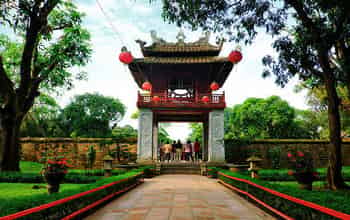
Chot Mat ancient tower
Chot Mat Tower Historical-Cultural Relic, located in Xom Thap hamlet, Tan Phong commune, Tan Bien district, Tay Ninh province, was recognized by the Ministry of Culture and Information (now the Ministry of Culture, Sports and Tourism) as historical - cultural relic on July 23, 1993. Also one of the last three ancient towers remaining in the South of our country. Having undergone many restorations in 1938, 2003 and most recently in 2013. Despite undergoing restorations, the Chot Mat ancient tower relic site has given itself a new look but still remains retains the spirit of ancient architecture. The entire Tower is built of brick and slate with the top of the tower tapering upward, from the ground to the highest point of the tower is estimated to be 10m. In addition, this ancient tower is located on a high mound in the middle of the field, so from a distance it looks like a pen rising gradually. In 2003, the People's Committee of Tay Ninh province decided to approve the investment project to restore, embellish and preserve Chot Mat tower relics and carried out the restoration, restoration, display and opening of the excavation pit in 2003. into use. On November 27, 2019, the Provincial People's Committee issued a Decision regulating the decentralization of management, protection and promotion of the value of historical and cultural relics and scenic spots in Tay Ninh province. Decision to assign the People's Committee of Tan Bien district to directly manage 4 relics, including the National Historical-Cultural relic Thap Chot Mat. In particular, the Chot Mat Tower Historical-Cultural Relic in Tan Phong commune, Tan Bien district was chosen to be part of the tourism development link of Tay Ninh Province. This is a tourist destination worth exploring, contributing to tourism development in Tan Phong commune in particular and Tan Bien district in general. Source: Tay Ninh province electronic information portal
Tay Ninh
12262 view
Rating : National monument
Duc Hoa Crossroads historical site
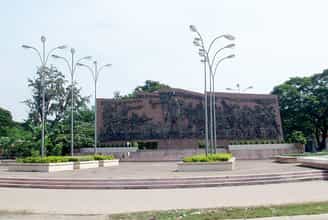
Duc Hoa Crossroads historical site is located in the center of Duc Hoa town. Here, on June 4, 1930, under the leadership of comrade Chau Van Liem - Secretary of the Gia Dinh-Cho Lon Joint Provincial Party Committee and comrade Vo Van Tan - Secretary of Duc Hoa District Party Committee, about 5,000 compatriots Communes in the district participated in the protest chanting slogans demanding people's rights to democracy, against high taxes, and against soldiers entering the village to oppress the people. Starting on different roads, groups of protesters met at Duc Hoa intersection at 5:00 p.m., and headed towards the District Palace, demanding to meet district chief Huynh Van Dau (also known as Sanh district). to resolve our claims. Faced with the strong fighting spirit of the masses, Sanh district was very scared and did not dare to face the people. To deal with the above situation, the enemy had to ask for reinforcements. At 8:00 p.m., enemy reinforcements arrived from the direction of Cho Lon - including the police of Hoc Mon, Cho Lon and 20 soldiers of the Saigon Police Department led by the stork Dreuil - Sanh district ordered the rescue. Disperse protesters and threaten the public. They tried to search to find the leader of the protest. All soldiers were armed, ready to use violence to oppress the group. Faced with the aggression of the attacker, the spirit of the masses did not waver, the people continued to clasp hands and move forward. The triggerman Dreuil ordered to shoot at the group of people, several people in the lead fell before the enemy's guns amid the screams of indignation from the masses. In the above tense situation, comrade Chau Van Liem quickly stepped forward to meet the broker Dreuil to present his demands, and at the same time directly debate and expose the barbaric actions and countless crimes of the enemy using capital. Fluent French. The debate lasted about 15 minutes, when suddenly the triggerman Dreuil pulled out a pistol and shot comrade Chau Van Liem in the chest. The soldiers stubbornly continued to fire at the protesters, killing and injuring more people, less than 100 meters from the district palace. The protest group stopped and dispersed but did not completely disperse. It was not until the enemy sent more forces and captured about 100 people with visas from the Governor of Cochinchina and the Governor of Cho Lon Province Renault that the protest ended. The protest was drowned in a sea of blood, but it caused a great stir at that time: For the first time in a quiet rural area, a deadly confrontation broke out with the enemy for the survival of tens of thousands of people. People have been oppressed and exploited for many generations. The protest on June 4, 1930 in Duc Hoa is considered the pinnacle of the revolutionary movement of Tan An - Cho Lon province in 1930. It demonstrated the Party's ability to lead and mobilize the masses to fight, and Duc Hoa people's single-minded belief in following the Party. In the years 1940-1941, Duc Hoa people continued to respond and participate in the Cochinchina uprising led by the Party right in their homeland. After the Cochinchina uprising, the French colonialists brutally suppressed the revolutionary movement of the masses. Also at this time, in Duc Hoa town, a shooting station was set up to execute soldiers participating in the uprising. Here, during the three days of July 7, 8, and 9, 1941, they continuously shot comrades and patriotic soldiers. The gun exploded, blood red all over the shooting range. Our soldiers died in the condolences of people throughout Duc Hoa town that day. Duc Hoa Crossroads area with locations such as: District Palace associated with the protest on June 4, 1930 of more than 5,000 Duc Hoa people; The execution station of soldiers participating in the 1940-1941 Cochinchina uprising... are historical evidence denouncing the crimes of colonial invaders, and are the pride of the Duc Hoa people in particular and the Vietnamese people. The South in general talks about the spirit of tireless struggle to gain independence and freedom. On September 5, 1989, the Ministry of Culture and Information recognized the Duc Hoa Crossroads Area as a national historical relic. Source: Long An Province Electronic Information Portal
Tay Ninh
8967 view
Rating : National monument

Tomb and temple of Mr. Nguyen Huynh Duc
Nguyen Huynh Duc's tomb and temple relics are located in Khanh Hau ward, Tan An city, Long An province. The relic complex includes temples, mausoleums and document galleries with an area of about 1,300 m2. Nguyen Huynh Duc's real name is Huynh Tuong Duc, born in 1748 in Giong Cai En, Tuong Khanh village, Hung Thuong district, Kien Hung district, Dinh Tuong town, now Khanh Hau ward, Tan An city, Long An province. He was born into a family with a 3-generation martial arts tradition, so he had the personality of a general from a young age, and his health and charisma were also superior to others. In 1780, he followed Lord Nguyen Anh and accomplished many great achievements, so he was given the royal family name. When Nguyen Anh ascended the throne and took the title of King Gia Long, Nguyen Huynh Duc was granted the title of Duke and then Governor of the North. Six years later, he became Governor of Gia Dinh and governed the entire South. According to folk legend and historical records, he was a loyal person, righteous, and highly skilled in martial arts. Everyone called him "Tiger General". On the 9th day of the ninth month of the Year of the Cat (1819), he died and was buried in his hometown. The Tomb of Former Soldier Nguyen Huynh Duc was built in 1817 (before his death) and still exists almost intact to this day. With laterite and mortar materials, the monument is influenced by the architectural style and design of the Nguyen Dynasty but still has local identity and has become a typical example of the tomb architecture of the early mandarin class. 19th century. The mausoleum faces south, has a rectangular architectural plan, and is of the single burial type. The altar at the northern entrance to the tomb is a 3m high laterite screen, embossed with apricot and fortune patterns. The 17 m long Shinto path leads from the screen to the main part of the tomb. The architectural structure from outside to inside includes: mausoleum door, front screen, sacrifice yard, tombstone, tomb and back screen. Surrounded by a layer of city walls combined with pillars representing lotus buds. The tombstone is carved from Non Nuoc Ngu Hanh Son stone, embossed with exquisite patterns of the sun, flowers and leaves turning into dragons on both sides of the stele's forehead; The stelae border is decorated with embossed images of chrysanthemums and apricot flowers; The center of the tombstone is inscribed with the national name Viet Co, the tomb of Gia Dinh Envoy of the Governor General, General of Tien Quan, presented to the Trung Duc dynasty, the General of the Fatherland, Thuong Tru Quoc, Deputy Grand Duke Nguyen Huynh, Duke, The stele was established in November of the Year of the Cat (1819). Behind the stele is the burial place of Nguyen Huynh Duc's body with a long flat grave. Behind the tomb is a rear screen that closes the tomb's architecture. Notably, on the back screen there is an inscription that is said to have been approved by King Gia Long himself to remember the merits of a great mandarin who accompanied him in life and death, and was the one who preserved his life. for the king and the revival of the Nguyen Dynasty. 20m south of the grave is Nguyen Huynh Duc temple. From 1819 to 1959, the family worshiped him in the old house built by King Gia Long about 500m from the tomb. In 1959, to facilitate worship, the family built this new temple in the style of four pillars, two floors of roof, wooden doors facing the East. Right behind the main door of the temple, there is an incense burner carved with dragons, phoenixes, flowers and leaves painted in gold, above it is a painting of the predecessor Nguyen Huynh Duc painted in 1802. In the temple there are many very valuable antiques and documents. treat. Nguyen Huynh Duc's Tomb and Temple Relics were ranked as a national monument by the Ministry of Culture, Sports and Tourism on May 11, 1993. Source: Long An Tourism
Tay Ninh
8615 view
Rating : National monument
Vam Nhut Tao historical relic site
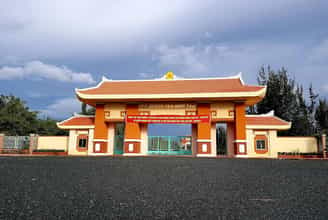
Vam Nhut Tao is the place marking the resounding victory of burning French ships by national hero Nguyen Trung Truc. Vam Nhut Tao was ranked as a national relic by the Ministry of Culture and Information in 1996. The entire relic is located in An Nhut Tan commune (now Tan Binh commune), Tan Tru district, Long An province. Nguyen Trung Truc's birth name is Nguyen Van Lich, also known as Chon, born in 1838 in Craft hamlet, Binh Nhut village, Cuu Ha district, Cuu An district, Tan An district (now Thanh Duc commune, Ben Luc district). , Long An province). Right when the French colonialists opened fire to attack Gia Dinh citadel, he joined the resistance army under the command of Truong Dinh and was sent to fight against the French in Tan An district. With the help of Nhut Tao village officials, he arranged a bold and intelligent plan to attack L' Espérance, a French small ship that was raging in the waters of Cuu An district. On the morning of December 10, 1861, after arranging an ambush on the shore and luring a part of the enemy to leave the ship, Nguyen Trung Truc and 59 insurgents boarded 5 boats pretending to be rice trading boats to approach the enemy ship. . While presenting his travel documents, he suddenly killed a French soldier and then joined the insurgents to attack French soldiers on the ship L' Espérance. Without time to react, all the enemies on the ship were destroyed (only 5 escaped). The insurgents used oil and inflammables to burn the ship L' Espérance. The rising fire slowly engulfed the ship to the deep river bottom. The news of Nhut Tao's victory excited the hearts of the people and soldiers throughout the country. The Hue court promoted Nguyen Trung Truc to the position of Quan Co, gave rewards to the insurgents, granted survivors, and provided financial support to Nhut Tao village (which was destroyed by the French army). The French colonialists were also extremely shocked because they could not imagine that the insurgents could cause them such great losses. "The Battle of Nhut Tao was the prelude to a general attack on almost all French posts... It was a tragic event that caused a deep emotion in the French and strangely stimulated the imagination of the Annamese people." - Excerpt from the work Abregede I'historie D'An Nam by Alfred Schreiner. Continuing that heroic spirit, immediately after the battle of Nhut Tao, the insurgents simultaneously rose up to attack the French fortress system in three eastern provinces, including the battle of Can Giuoc (December 16, 1861). history along with the immortal tribute to Can Giuoc martyr. Time passes quietly, Nhut Tao temple is still there as if it evokes nostalgia in the hearts of visitors. The ship L' Espérance, after nearly 120 years resting at the bottom of the deep river, has been excavated. The total number of artifacts recovered is 89, including 78 wooden artifacts, 8 iron artifacts, 2 bronze artifacts and 1 glass artifact. Through studying wooden artifacts, we also see all the parts to form the ship's frame such as beams, beams, keels, and masts. Although the L'Espérance ship had been chiseled to remove scrap, there were still some pieces of copper-covered wood that clearly showed burn marks. All of the above-mentioned artifacts have been preserved and displayed at Long An Museum to introduce domestic and foreign visitors to specific evidence of the heroic victory of fisherman hero Nguyen Trung Truc a long time ago. more than a century. In the future, a temple, a monument to fisherman hero Nguyen Trung Truc and other construction items will be built on the banks of Nhut Tao river, making this poetic river area not only of historical significance but also of historical significance. Also worth visiting for tourism. Source: Long An Tourism
Tay Ninh
8550 view
Rating : National monument

Giac Ngan Pagoda
Giac Ngan Pagoda is located on provincial road 781, from Tay Ninh town to Chau Thanh district, one of the ancient pagodas in Tay Ninh that still exists. The pagoda is located in Binh Phong hamlet, Thai Binh commune in a peaceful and pristine setting, with an ancient architecture, close to folk culture, reflecting the traditional beauty of Vietnamese Buddhism. The temple was built on an area of about 400 square meters and is located on a 1 hectare plot of land. The front of the pagoda is a facade consisting of 3 compartments 8m high, with stairs leading up to it on both sides. In front of the yard is a beautiful and simple stone mountain, inside the mountain there is a statue of Bodhisattva Avalokiteśvara. There is also a solemn white statue of Sakyamuni Buddha. To the right of the pagoda is the cemetery, the resting place of deceased Buddhists. Giac Ngan Pagoda was built by Luc Hoa Tang Buddhist sect more than 100 years ago, after Thien Lam Pagoda, at the same time as Phuoc Lam, Cao Son, Long Son, Hanh Lam, Cam Phong pagodas. At first, the pagoda was only built with simple materials. It was not until 1950 that it was built solidly according to today's architecture. The person who repaired and rebuilt the pagoda was monk Thich Giac Thien from Ba Den mountain. Next is monk Thich Tinh Hai. Since 1994, Venerable Thich Hue Thong has been the abbot until now. During the resistance war against the French and Americans, Giac Ngan Pagoda was once a safe base for revolutionary cadres. Nowadays, sometimes people still come back to visit the beloved temple of the past. During spring days and major Buddhist holidays such as the full moon days of January, April, and July, Giac Ngan Pagoda is always bustling and crowded. Believers and Buddhists who come here are not only local people but also many people from other places. Source: Tay Ninh Buddhism
Tay Ninh
8440 view
Rating : Provincial level relics
Nearby tourist attractions
See all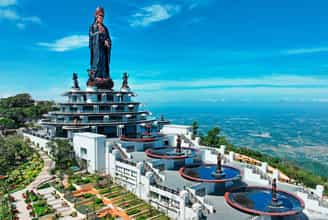
Ba Den Mountain
Ba Den Mountain is a famous mountain located in the cultural and historical relic complex of Ba Den Mountain and is associated with many legendary stories. With a height of 986m, Ba Den Mountain has become the roof of the Southern region and possesses majestic scenery amidst vast green rice fields. Currently, the mountain has been invested and built a campus with all kinds of flowers, blurry white clouds flying, creating a scene similar to Da Lat and especially the appearance of the Buddha statue of Tay Bo Da Son. highest in Vietnam. According to the current popular experience of going to Ba Den Mountain, you can conquer the mountain peak in many ways. Ba Den Mountain is a famous mountain located in the cultural and historical relic complex of Ba Den Mountain and is associated with many legendary stories. With a height of 986m, Ba Den Mountain has become the roof of the Southern region and possesses majestic scenery amidst vast green rice fields. Currently, the mountain has been invested and built a campus with all kinds of flowers, blurry white clouds flying, creating a scene similar to Da Lat and especially the appearance of the Buddha statue of Tay Bo Da Son. highest in Vietnam. According to the current popular experience of going to Ba Den Mountain, you can conquer the mountain peak in many ways. The ideal time to travel to Ba Den Mountain is from December to April. The weather at this time is dry and cool, very suitable for climbing and camping activities. In particular, during the Ba Den Pagoda festival season from January 4 to 16, you can come to pray for good things in this sacred land. For those who like to explore and experience the feeling of conquest, Ba Den Mountain will be an extremely wonderful place. According to experience traveling to Ba Den Mountain so far, there will be 5 routes with 5 different levels for you to choose from. The average time is about 3 to 4 hours depending on the route. And during the climb, when you stop to rest, you will enjoy the increasing beauty of the surrounding landscape. The higher you go, the more majestic and interesting everything looks. If you're lucky, on the way you will see white cloud friends hovering next to you. After reaching the top of the mountain, you must definitely check-in at the coordinates of Ba Den Mountain to save your glorious moment at the highest peak in Southern Vietnam. In addition, this place is surrounded by clouds all year round, creating an extremely magical space. Remember to capture these moments at the "cloud balcony". One of the important experiences when traveling to Ba Den Mountain that you must keep in mind is what to reward your belly with. Here are some suggestions that you can add to the menu to make your trip more complete: Tay Ninh young beef, Dew-dried rice paper rolled with pork, Tay Ninh grapefruit spring rolls, BBQ right at the top of the mountain...
Tay Ninh
7427 view
From December to April

Binh Thanh ancient tower
Oc Eo culture is an ancient culture associated with the Southern region and the lower Mekong delta. Binh Thanh Ancient Tower is one of the rare remaining architectural masterpieces of this culture. Over the centuries, the ancient tower has still preserved its unique architecture almost intact and has become the most attractive tourist destination in Tay Ninh. Binh Thanh Ancient Tower was built in the 8th - 9th centuries and is now more than 1,000 years old. This is one of three typical architectural works of the Oc Eo culture remaining in the Southern region. The ancient tower is located on the right bank of Vam Co Dong river, in Binh Hoa commune, Trang Bang district, about 50km southeast of Tay Ninh city center. The Ancient Tower relic area has a total of 3 towers, but only the main tower is still intact, the main tower was restored in 1998. The remaining two towers have been destroyed, only the ruins remain. built on a square foundation. In the early twentieth century, Binh Thanh Tower and Tay Ninh Chop Mat Tower were discovered through archaeological reports at the Indochina archaeological research library. By 1993, these two towers were officially recognized as National Historical Monuments. Tay Ninh is in the Southeast region, the climate is temperate, divided into two distinct seasons: the dry season and the rainy season. The rainy season lasts from May to November, the dry season from December to April of the following year. The dry season in Tay Ninh is sunny but not too hot, suitable for outdoor tourism activities. If you want to visit Binh Thanh Ancient Tower, you should go in the dry season, so choose in the morning or late afternoon to avoid harsh sunlight. Binh Thanh Tay Ninh Ancient Tower is located on Provincial Road 786, in Binh Hoa commune, Trang Bang district. From the center of Tay Ninh city, you go along Highway 22B towards the center of Go Dau district, to the intersection of Voi hamlet (Ben Cau district), turn right to enter Provincial Road 786. From here, you run about 20km more. You will see a turn leading to the Ancient Tower. For convenience in visiting the Ancient Tower and famous tourist destinations in Tay Ninh, visitors should stay in the central area. In Tay Ninh, there are many types of resorts, with prices ranging from affordable to high-end. Depending on your needs, you can choose a suitable place to stay. Binh Thanh Ancient Tower was discovered in 1886 and is a rare architectural heritage of the Oc Eo culture that still retains its original construction design. Dating back centuries, this ancient tower has witnessed many ups and downs of Vietnamese history. Besides, Binh Thanh Tower also contains traditional cultural values, beliefs and religions of the ancient Funan people. The patterns and reliefs embossed on the tower are popular images in Hinduism, including stylized flowers and leaves, vitality, gods... These are symbols that Funan people worship and worship through. many centuries. The architecture, construction techniques and sculpture shown on the Stock Tower reflect the development to the pinnacle of Oc Eo culture at that time. These are valuable documents that help researchers learn and discover more unique historical and cultural values in this ancient relic. Besides, Binh Thanh Tower also contains traditional cultural values, beliefs and religions of the ancient Funan people. The patterns and reliefs embossed on the tower are popular images in Hinduism, including stylized flowers and leaves, vitality, gods... These are symbols that Funan people worship and worship through. many centuries. The architecture, construction techniques and sculpture shown on the Stock Tower reflect the development to the pinnacle of Oc Eo culture at that time. These are valuable documents that help researchers learn and discover more unique historical and cultural values in this ancient relic. With unique architecture, Binh Thanh Ancient Tower is a destination not to be missed for "virtual living" believers. The ancient tower has strange check-in corners, from mossy ancient walls to carved patterns on stone. Just lift the camera and you will have yourself an impressive set of photos. Besides, visitors coming here also have the opportunity to learn about historical stories and ancient Oc Eo culture.
Tay Ninh
7276 view
December to April

Moc Bai border gate
Moc Bai border gate located in Loi Thuan commune, Ben Cau district is one of the international land border gates that began operating in 2004. Located on the Trans-Asia road extending from Myanmar through Thailand, Laos, and Vietnam. South, Cambodia and ending in China, this place receives many special advantages both in economic - cultural exchanges and tourism development. Currently, Moc Bai is a border gate area and tourist destination that attracts thousands of visits each year in the "holy land" of Tay Ninh next to Lo Go - Xa Mat National Park, Binh Thanh Ancient Tower, Chang Riec Forest... Here are some notes that everyone needs to keep in mind when coming to Moc Bai Border Gate to have fun: You absolutely should not pawn items to help strangers when passing through the border gate to avoid getting into trouble with banned substances as well as breaking the law. At the border gate, there will be many motorbike taxis to entice you to cross the border for prices ranging from 400,000 VND to 500,000 VND without a passport. This is a serious violation of the law, so everyone should pay close attention. The group moved to Moc Bai and planned to visit Cambodia, so they proactively exchanged money for convenient shopping. The corresponding exchange rate for 20,000 VND will be 3,500 KHR. Moc Bai Border Gate Area is located about 80km from the center of Ho Chi Minh City and about 170km from Phnom Penh Capital (Cambodia). Departing from Saigon to the tourist destination, you can book a bus ticket, limousine, take a bus or go directly to Tay Ninh by motorbike or personal car depending on your preferences and financial needs. Normally, limousines from 10 to 31 seats running the Ho Chi Minh City - Moc Bai route will cost about 1,800,000 VND/person round trip. After buying tickets directly or booking online at reputable agents, you will depart the trip at 302, Cong Hoa Street, Ward 13, Tan Binh District and stop at Moc Bai Border Gate. Some bus companies going to Tay Ninh that you can consider if choosing this long-distance vehicle are Dong Phuoc (hotline: 1900 1152), Thai Duong Limousine (1900 9227), Le Khanh (1900 7070)... For tourists traveling by motorbike or personal car, from Saigon you can drive along Highway 22 to Trang Bang district first. After stopping here, you go towards Go Dau town through An Thanh Commune People's Committee about 7.4km to the famous border gate area. Besides the supermarket, it would be a huge mistake if you come to Moc Bai Border Gate and miss the opportunity to try your luck at famous casinos such as Moc Bai Bavet, New World, Le Macau, Chateau, Las Vegas Sun... located towards Bavet (Cambodia) takes less than 5 minutes to travel. To enter the casino, you need to prepare a certain amount of cash to participate in the games. Around the casino, there are also many large-scale cockfighting arenas that often use Vietnamese dong or US dollars to bet. Depending on your financial conditions, you can choose entertainment spots that suit your interests and needs when you have the opportunity to stop here. After having fun at Moc Bai Border Gate, you can go through quite simple entry and exit procedures to travel to Cambodia to explore this beautiful country. Just travel about 170km by car or motorbike from Bavet Border Gate road, you can check-in at Phnom Penh - a place famous for its impressive Buddhist architectural works. Tuol Sleng Genocide Museum, Wat Phnom Temple, Central Market... are some attractions in the capital area that you definitely cannot miss.
Tay Ninh
11593 view
From January to December

Ma Thien Lanh tourist area
Ma Thien Lanh Valley carries with it many mysterious stories and legends that make anyone who hears them shudder because of its sacredness and magic. One of the most prominent stories told by local people originates from the resistance war against the French and Americans. The enemy troops that invaded our country had to go through the valley and more than 70% of the troops died in this holy place. The number of people left was so small that they were all easily defeated by our army. In addition, some people who have lived in Ma Thien Lanh Valley for a long time said that they have faced giant snakes, even cobras nearly as big as an adult's calf. However, up to now no one has been in danger from the venom of that ferocious snake, so it is only considered one of the mysterious stories of this sacred mountain region. Departing from Ho Chi Minh City, you can travel by motorbike or choose reputable Tay Ninh bus companies to travel to Ma Thien Lanh Valley. You go along National Highway 22A until you see Trang Bang intersection, then turn right onto provincial road 782. Then, you continue about 50km to reach Tay Ninh town. Here, you just need to go straight along the 3km long asphalt road connecting Provincial Road 782 to Phung Mountain and then go through a small road to Ma Thien Lanh Valley. This road is considered quite difficult to travel, so if you travel by motorbike, you need to have a steady hand on the steering wheel. If you depart from Tay Ninh city, moving to Ma Thien Lanh Valley is very easy. With a distance of only about 11km, you can go by motorbike to be more proactive with your time. From the center of Tay Ninh city, you can choose to go in the direction of Tran Phu or Boi Loi street. If you do not know the route clearly, you can follow the directions of Google Maps and rest assured that this road is very easy to follow. To discover the full beauty of Ma Thien Lanh Valley, you will have to walk and trek through mountain climbing paths and forests. This is a challenging but also very interesting road for those who love to explore and adventure. Throughout the trekking route of Ma Thien Lanh Valley, you will encounter a series of giant rocks and overcome countless steep, dangerous slopes one after another. Although the road is full of difficulties and challenges, during the trekking journey, you will be very excited to see with your own eyes the endless mountain scenery, diverse vegetation with countless rare and precious forest species. Hearing the gurgling stream mixed with the chirping of birds is extremely pleasant. Ma Thien Lanh Valley possesses a wild, primitive and mysterious beauty that makes anyone captivated. This place is also likened to Da Lat of the Southeast region because of its extremely magnificent natural scenery. Looking down from above, Ma Thien Lanh Valley looks like a giant basin covered with vast old forests. Adorning the impressive beauty are countless precious wood trees hundreds of years old such as ancient trees, eucalyptus... In addition, people in the area also grow many fruit trees here such as mango, rambutan, banana, guava. , plums... to increase the richness of this land. The entire Ma Thien Lanh Valley is like a natural picture that is both vast, majestic, mysterious and magical.
Tay Ninh
7069 view
November to April

Dau Tieng Lake
Tay Ninh Dau Tieng Lake stretches across three provinces: Binh Duong, Binh Phuoc and Tay Ninh. The upstream of this lake belongs to Dau Tieng district, Tay Ninh province with a large area. Dau Tieng Lake is located about 25km east of the city center. Dau Tieng Tay Ninh Lake was started construction in 1981. After 4 years of construction, this artificial lake was completed on January 10, 1985. The capacity of Tay Ninh Dau Tieng Lake is estimated to contain about 1.58 billion cubic meters of water. Tay Ninh Dau Tieng Lake is the largest artificial lake in Vietnam. Not only does it play a role in coordinating water for the Saigon River, this lake is also a tourist destination that attracts many visitors. The space at Tay Ninh Dau Tieng Lake possesses charming landscape beauty and a cool atmosphere that will surely make you fascinated and forget the way home. There are many means of transportation for you to choose when moving to Dau Tieng Lake, Tay Ninh. You can ride a motorbike or taxi depending on your preferences and personal needs. Starting from the center of Tay Ninh city, you go along Cach Mang Thang Tam street and then turn to Ba Den Mountain. After arriving at Duong Minh Chau town, turn right and go straight about 2km along the dike road to reach your destination. Tay Ninh Dau Tieng Lake has long been famous for its poetic and romantic beauty. The clear blue lake surface, floating clouds combined with lush green grass promise to make you extremely fascinated. Watch sunrise and sunset at the lake. This is an interesting experience that you cannot miss when traveling to Dau Tieng Lake in Tay Ninh. In addition to exploring the natural landscape, watching the sunrise and sunset at the lake will bring you a feeling of extreme peace and relaxation. Tay Ninh Dau Tieng Lake appears like a poetic watercolor painting, making anyone lost in this place captivated with its beauty. When traveling to Dau Tieng Lake in Tay Ninh, you can take time to enjoy the delicious dishes below. Rice paper rolls dried in dew. This is a famous specialty of Tay Ninh Dau Tieng Lake that you must definitely try. The rice paper shell has a subtle rice flavor, the roll inside includes boiled meat, vermicelli, wild vegetables, bean sprouts, cucumber, pickled carrots... This rustic dish is loved by many locals. Trang Bang noodle soup is a memorable dish because of its rich, sweet flavor. Most local people know how to prepare this specialty dish. In addition, grilled fish with salt and chili is a dish that cannot be missed. The fish are marinated with spices to taste and will definitely make you pick up your chopsticks non-stop. This is a popular dish in Tay Ninh, making a strong impression with its naturally sweet, chewy fish flavor mixed with typical chili salt.
Tay Ninh
8226 view
November to April
 AI Travelviet